Polyphony and Piano Sounds: Reading Specifications
What 128- or 256-note polyphony really means, how tone counts differ, and how to read the sound and speaker specs of a digital piano calmly.

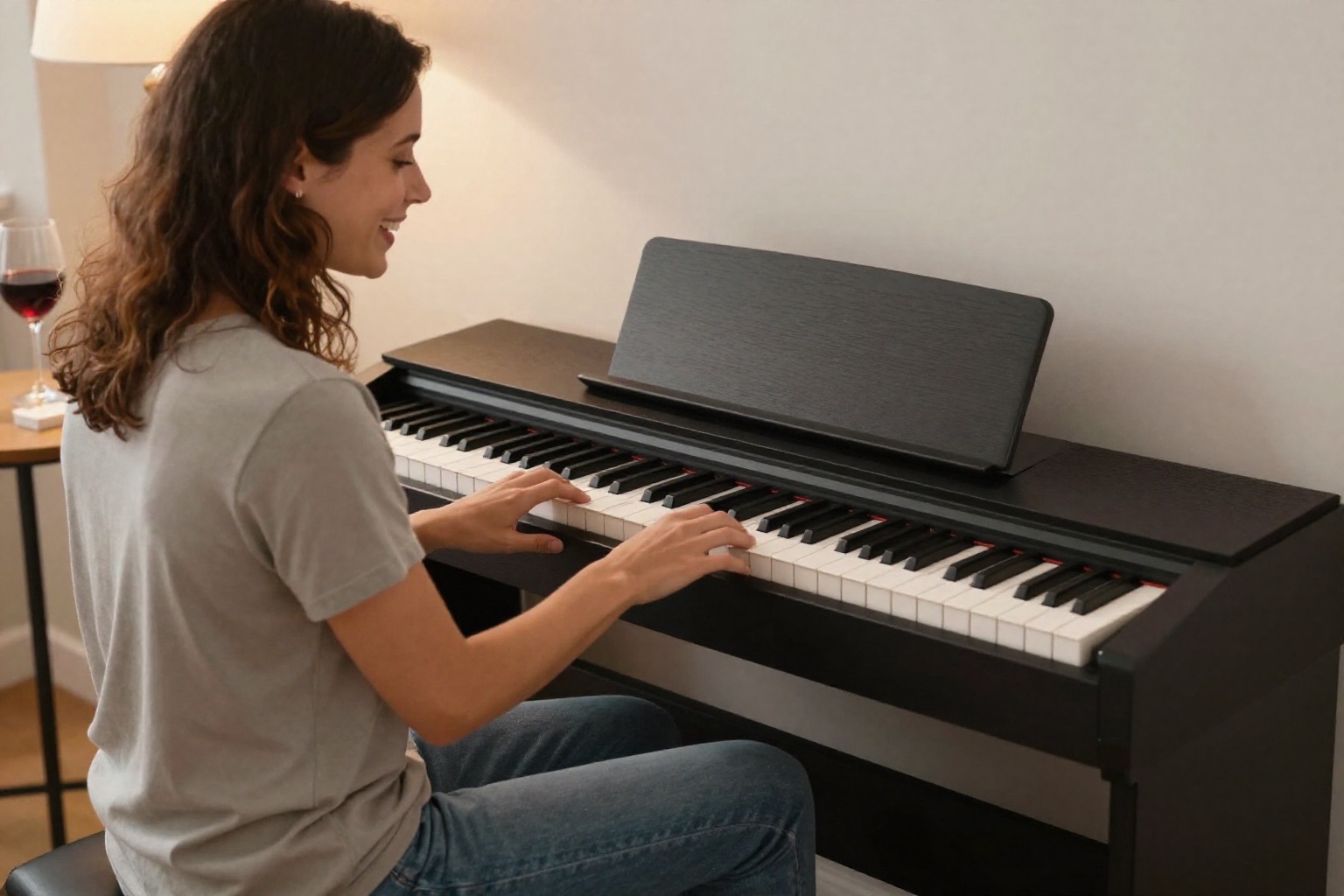
Polyphony is the maximum number of notes a digital piano can sound at the same time; 64 notes is the floor for beginner pianos, 128 to 192 is comfortable for most players, and 256 is generous. You run into the limit when the sustain pedal holds many notes, so the more you pedal and layer sounds, the more polyphony matters. Voice count is a different spec: it tells you how many sounds the piano has, not how good the piano sound is.
Affiliate disclosureAs an Amazon Associate we earn from qualifying purchases made through links on this page. Commissions never change our ratings.
What polyphony means
Kawai defines it as the maximum number of individual notes the piano can produce at once: a 192-note piano can play 192 notes at the same time. Ten fingers sound like ten notes, but the sustain pedal changes that. Every note you play while the pedal is down keeps sounding, and Yamaha points out that pedalled arpeggios and clusters use up notes quickly.
When a piano runs out, it drops the oldest notes to make room for new ones, Kawai explains. You hear it as a bass note or a chord that suddenly vanishes while the pedal is still down.

Polyphony of the pianos we track
| Piano | Polyphony | Voices |
|---|---|---|
| Yamaha P-45 / P-71 | 64 | 10 |
| Yamaha P-145BT | 64 | 10 |
| Roland FP-10 | 96 | 36 (15 from the panel) |
| Alesis Recital / Recital Pro | 128 | 5 / 12 |
| Casio PX-770 | 128 | 19 |
| Yamaha P-225, YDP-146 | 192 | 24 / 10 |
| Casio PX-S1100 | 192 | 18 |
| Casio PX-870 | 256 | 19 |
Yamaha’s own ladder shows how the step-up works: 64 notes on the P-45, 192 on the P-125A and 256 on the P-515.
How much polyphony do you need?
- First years of lessons: 64 notes is enough for most beginner pieces, which use the pedal sparingly.
- Romantic repertoire with long pedalling, or a lot of layering: aim for 128 or more. Layering two sounds plays two sounds per key, so it asks more of the same budget.
- Recording or playing along with the piano’s own backing: 192 gives headroom.
Polyphony is one spec among several. A 64-note piano with a good graded hammer action is a better learning tool than a 256-note one with semi-weighted keys; our guide to key actions explains why the keys come first.
Voices, samples and what makes a piano sound good
A digital piano plays recordings of a real piano. Yamaha describes it plainly: there are no strings, sensors read the keys, and recorded grand piano sound is played through speakers. The quality of that recording, the number of loudness layers, and resonance effects decide how good it sounds, and makers describe them with their own names (Yamaha CFX or CFIIIS samples, Roland SuperNATURAL, Casio AiR).
The voice count says how many other instruments are on board. Ten voices (piano, electric piano, organ, strings and a few more) covers practice; hundreds of voices, like the 630 of the Yamaha DGX-670, matter for arranging, not for learning piano. Speakers count too: 6 W x 2 on the P-45 against 8 W x 2 on the YDP-146 cabinet, per Yamaha. Through good headphones the difference shrinks.
Which of our rated pianos have the most headroom
Among our best-rated models, the Donner DEP-20 (9.4/10) lists 128-note polyphony, as does the STRICH SDP-300W, Walnut (8.1/10). The Casio PX-S1100, Gloss Red (7.5/10) has 192 per Casio, and the Casio Privia PX-770, Black (8.1/10) 128. The Yamaha P71 (9.2/10) and Yamaha P45 (8.8/10) stay at 64, which is enough for the first years, and they lead our ranking for their keyboard and long review records.
Our rated picks
The three best-rated models of our best digital pianos ranking, from buyer reviews and the listed specs.


Product images: Amazon listings
Frequently asked questions
What is polyphony on a piano?
The maximum number of notes a digital piano can sound at once. A 128-note piano can hold 128 notes, for example while the sustain pedal is down.
Is 64-note polyphony enough?
For beginners and most early pieces, yes. With heavy pedalling or layered sounds, 128 notes or more avoids notes cutting out.
What happens when a piano runs out of polyphony?
It drops the oldest notes to play the new ones, so a held bass note or chord can disappear while the pedal is still down.
Does more voices mean a better piano?
No. Voices are the other sounds on board. The quality of the main piano sound and the keyboard matter more for learning.
Sources
- Kawai — What is polyphony? (consulted Nov 2026)
- Yamaha Hub — Step up to a better keyboard, part two: advanced features (consulted Nov 2026)
- Yamaha — P-45 specifications (consulted Nov 2026)
- Yamaha — P-145BT specifications (P Series comparison table) (consulted Nov 2026)
- Roland — FP-10 digital piano (features and specifications) (consulted Nov 2026)
- Alesis — Recital (consulted Nov 2026)
- Alesis — Recital Pro (consulted Nov 2026)
- Casio — PX-870 / PX-770 user’s guide (PDF) (consulted Nov 2026)
- Casio — PX-S1100 user’s guide (PDF) (consulted Nov 2026)
- Yamaha — ARIUS YDP-146 specifications (consulted Nov 2026)
- Yamaha — Acoustic or digital? (consulted Nov 2026)
- Yamaha — DGX-670 portable grand (consulted Nov 2026)
Products mentioned
- Casio Privia PX-870 (exact listing), read our review