Digital Piano Pedals: Compatibility Before Features
Sustain, soft and sostenuto pedals explained: footswitch or 3-pedal unit, half-pedalling and the jacks on the back, so your pedal really works.

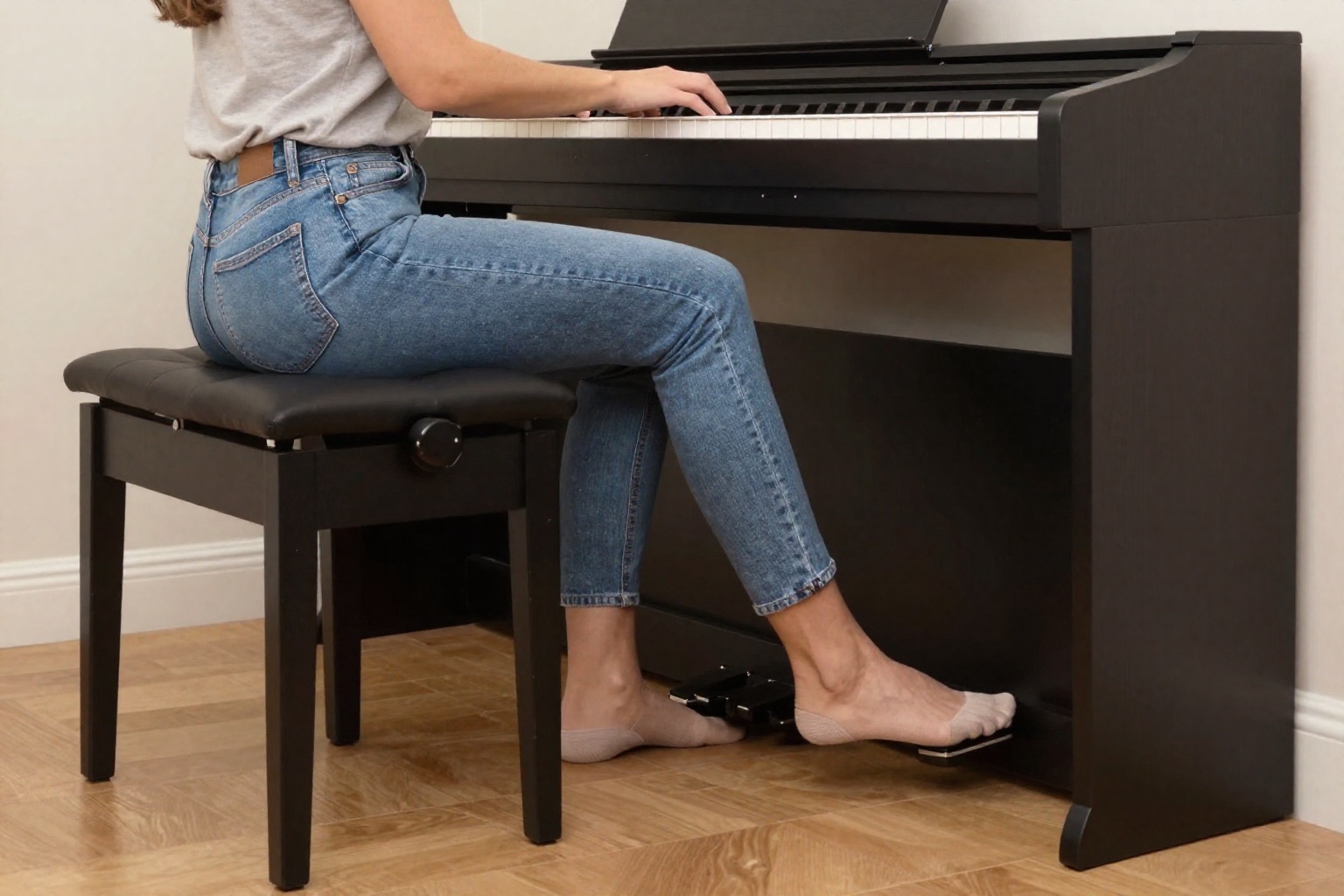
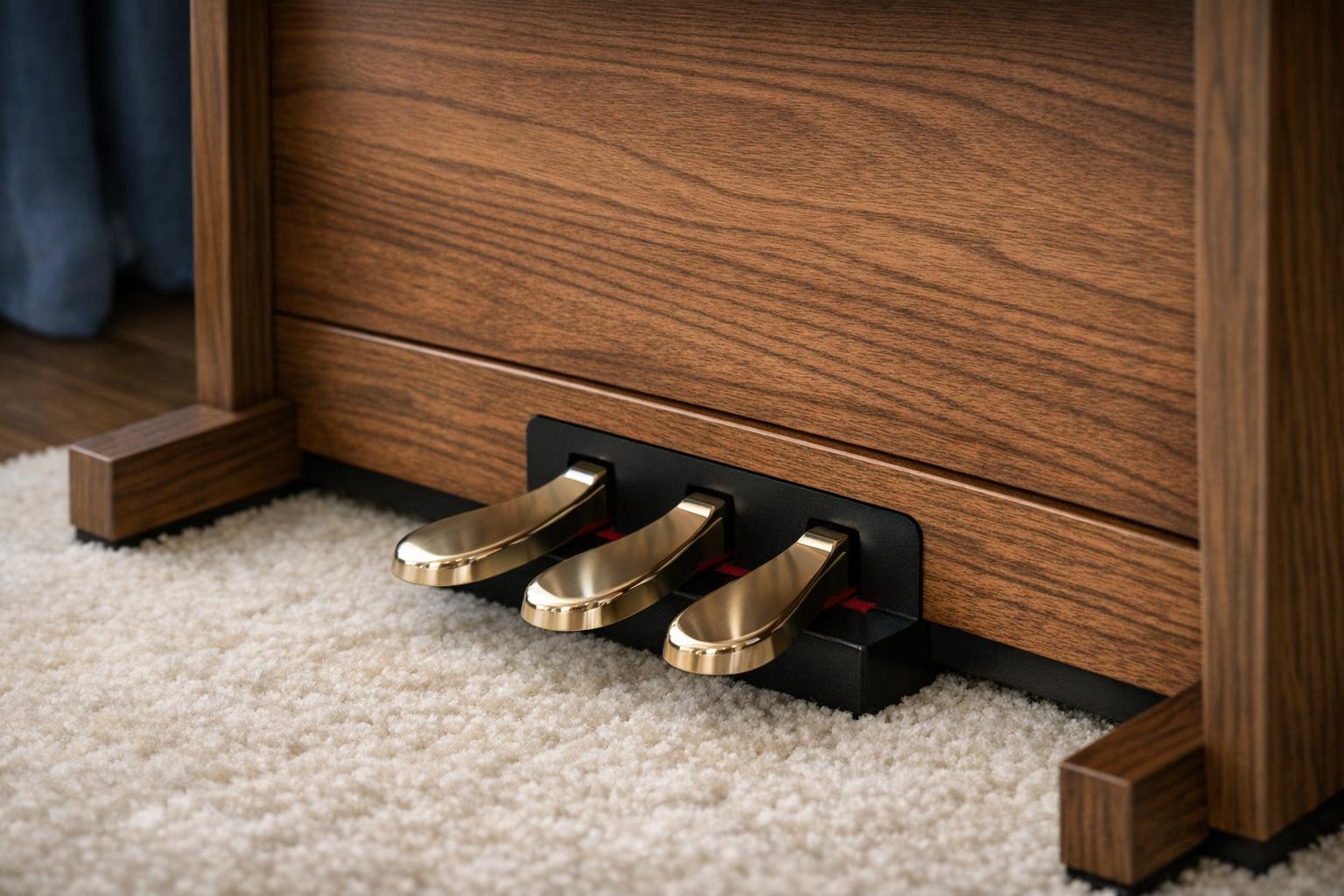
Most portable digital pianos come with one small footswitch for sustain, while cabinet models have three pedals: sustain on the right, sostenuto in the middle and soft on the left. For lessons the sustain pedal is the one that counts, and a piano-style pedal with half-pedal support plays far better than a little square switch. Check what is in the box, the jack, and whether the piano accepts a three-pedal unit later.
Affiliate disclosureAs an Amazon Associate we earn from qualifying purchases made through links on this page. Commissions never change our ratings.
What each of the three pedals does
Yamaha’s pedal guide explains the three pedals of a piano, and digital pianos copy them:
| Pedal | Position | What it does | How often you use it |
|---|---|---|---|
| Sustain (damper) | Right | Notes keep ringing after you lift your fingers | Almost every piece |
| Sostenuto | Middle | Holds only the notes you are pressing when you push it | Rarely, some classical pieces |
| Soft (una corda) | Left | Quieter, gentler tone | Now and then, for colour |
On some pianos the middle pedal is a "bass sustain" that holds only the low notes, Yamaha notes. On a digital piano the soft pedal is simulated: the sound gets quieter and gentler, nothing moves inside.
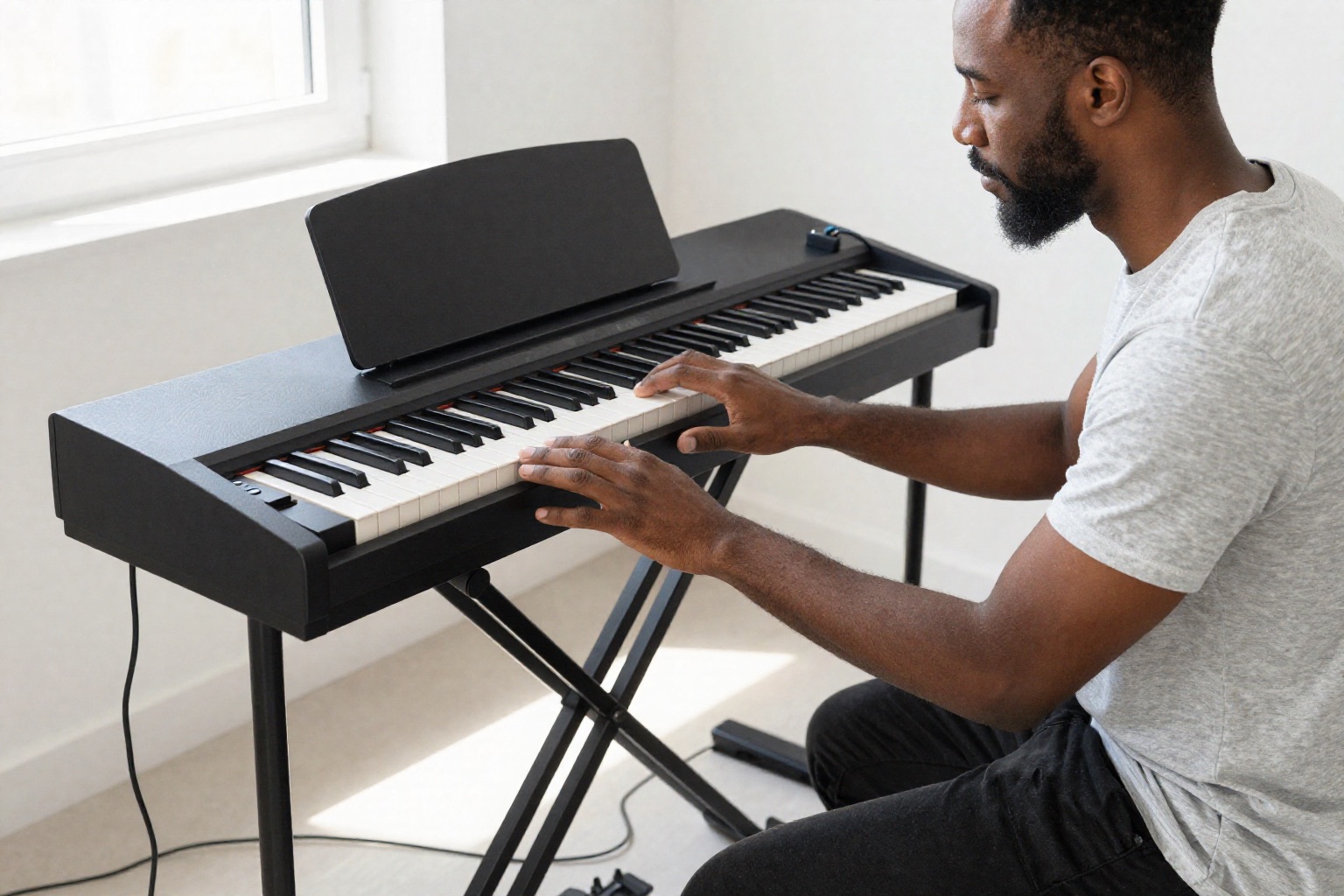
Footswitch, sustain pedal or three-pedal unit
What comes in the box differs a lot, even inside one brand:
- Yamaha P-45: footswitch included; half pedal only with the optional FC3A pedal; no pedal unit, per Yamaha’s specs.
- Yamaha P-145BT: footswitch, and it accepts the optional LP-5A three-pedal unit.
- Roland FP-10: a pedal switch is included; the optional DP-10 damper pedal adds half-pedal support.
- Yamaha ARIUS YDP-146 (cabinet): three pedals built in, the damper with half-pedal function.
- Alesis Recital and Recital Pro: sustain input only, pedal not included.
A footswitch is a small on/off box that slides around the floor. A piano-style sustain pedal is heavier, has a real lever and stays put. If your piano comes with a footswitch, a proper pedal is one of the best small upgrades you can make.
Half-pedaling and why teachers care
A plain switch is either on or off. A continuous pedal also reads the positions in between, so you can lift the dampers halfway. Yamaha’s P-71 manual describes it simply: let up to a half position or higher for a clearer, less muddy sound, especially in the bass.
Beginners will not miss it in the first months. By the time pieces call for pedaling every bar, half-pedaling helps a lot, and that is when a continuous pedal (FC3A on a Yamaha, DP-10 on the Roland FP-10) earns its place.
Pedal mistakes that are easy to avoid
- Pedal works backwards. The piano reads the pedal position at power-on. Yamaha’s P-71 manual says not to press the footswitch while switching on, or the polarity flips. Switch off, release, switch on again.
- Plugging in while the power is on. The same manual asks you to turn the piano off before connecting or disconnecting a pedal.
- Third-party pedals. Universal pedals use a 1/4 inch (6.35 mm) plug and often a polarity switch, like the Donner DSP-001 in its listing. Set the switch to match your brand.
- Buying three pedals you will not use. For a portable, a good single sustain pedal matters more than a cheap three-pedal bar.
Want to add pedals to a bundle? Our guide to bundles and accessories shows what is worth paying for.
Which of our rated pianos come with three pedals
If three pedals matter from day one, look at cabinet and furniture-stand models. The Donner DEP-20 (9.4/10), Donner DDP-100, Black (8.6/10) and Donner DDP-80 (8.4/10) all list three pedals, and the first two a stand as well. The Yamaha P71 (9.2/10) and Yamaha P45 (8.8/10) come with a sustain footswitch, so a proper sustain pedal is the first add-on. A universal pedal such as the Donner DSP-001 Sustain Pedal is in our accessories catalogue.
See the full console digital pianos ranking for models with pedals built in.
Our rated picks
The three best-rated models of our best digital pianos ranking, from buyer reviews and the listed specs.


Product images: Amazon listings
Frequently asked questions
What do the 3 pedals on a digital piano do?
Right: sustain, notes keep ringing. Middle: sostenuto, holds only the notes you are pressing. Left: soft, a quieter and gentler tone.
Do I need three pedals as a beginner?
No. The sustain pedal covers almost all beginner music. A good single sustain pedal is worth more than three cheap ones.
Why does my sustain pedal work backwards?
It was pressed or plugged in when the piano was switched on, so the polarity was read the wrong way. Switch off, let go of the pedal and switch on again.
Can any sustain pedal work with any digital piano?
Most use a 1/4 inch jack. Universal pedals often have a polarity switch; half-pedal support needs a pedal the piano can read as continuous.
Sources
- Yamaha Hub — How to use keyboard pedals (consulted Nov 2026)
- Yamaha — P-45 specifications (consulted Nov 2026)
- Yamaha — P-145BT overview (consulted Nov 2026)
- Roland — FP-10 digital piano (features and specifications) (consulted Nov 2026)
- Yamaha — ARIUS YDP-146 specifications (consulted Nov 2026)
- Alesis — Recital (consulted Nov 2026)
- Yamaha — P-71 owner’s manual (PDF) (consulted Nov 2026)
Products mentioned
- Donner DEP-20 (exact listing), read our review