Console or Portable Digital Piano: Choosing a Format
Console or portable digital piano? Compare delivery, setup, room footprint, pedals and moving house before you pick the format you will play.

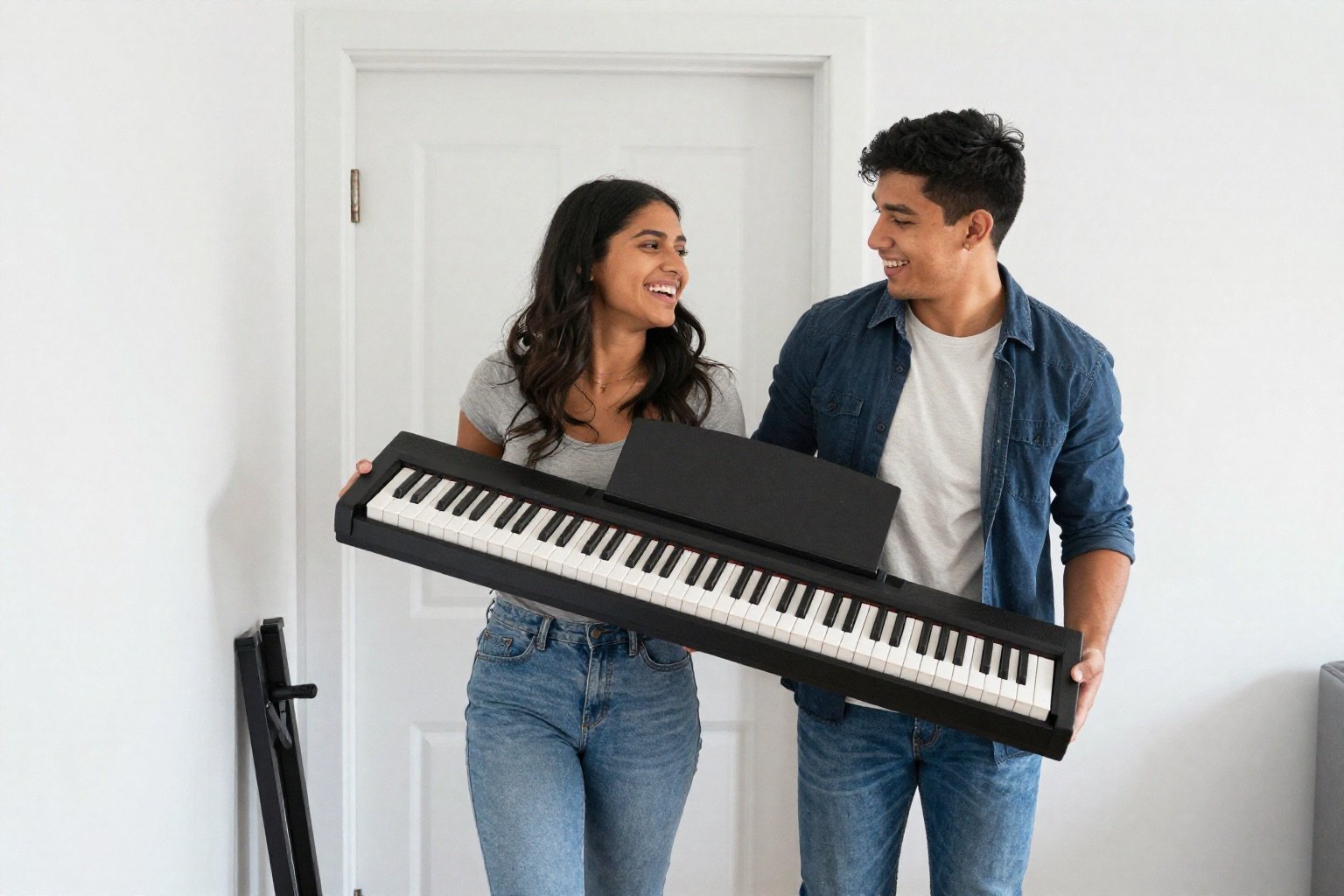
A console digital piano sits in a furniture cabinet with three pedals built in and stays in one room; a portable is a slab of about 11 to 13 kg that you set on a stand, a desk or in a bag. Choose a console if the piano will live in one place and you want the height and pedals fixed. Choose a portable if space, moving or budget come first.
Affiliate disclosureAs an Amazon Associate we earn from qualifying purchases made through links on this page. Commissions never change our ratings.
The real difference
Inside, the two can be close cousins. Yamaha’s ARIUS YDP-146 uses the same GHS graded hammer keyboard as the portable P-45, per Yamaha’s specs. What changes is everything around the keys: the cabinet, the pedals, the speakers and how often you can move it.
A console gives you a fixed keyboard height, three pedals that never slide, and speakers built into a wooden box. A portable gives you a light instrument you can put away, carry to lessons or set on any stand, but you assemble the rest yourself.

Weight and footprint, in numbers
| Model | Width x depth | Weight | Pedals |
|---|---|---|---|
| Yamaha YDP-146 (console) | 1,357 x 422 mm | 38 kg | 3 built in |
| Casio PX-770 (console) | 1,391 x 299 mm | 31.5 kg | 3 built in |
| Yamaha P-45 | 1,326 x 295 mm | 11.5 kg | Footswitch |
| Roland FP-10 | 1,284 x 258 mm | 12.6 kg | Pedal switch |
| Casio PX-S1100 | 1,322 x 232 mm | 11.2 kg | Pedal jacks |
Two things stand out. The width barely changes, 88 keys need about 1.3 m whatever you buy. And a console weighs about three times as much (the Casio figure includes its stand; the Roland FP-10 reaches 20 kg on its own stand), which is a plus for stability and a minus on moving day. The portable Casio also runs on 6 AA batteries for about 4 hours, per its guide.
What a portable needs to feel like a console
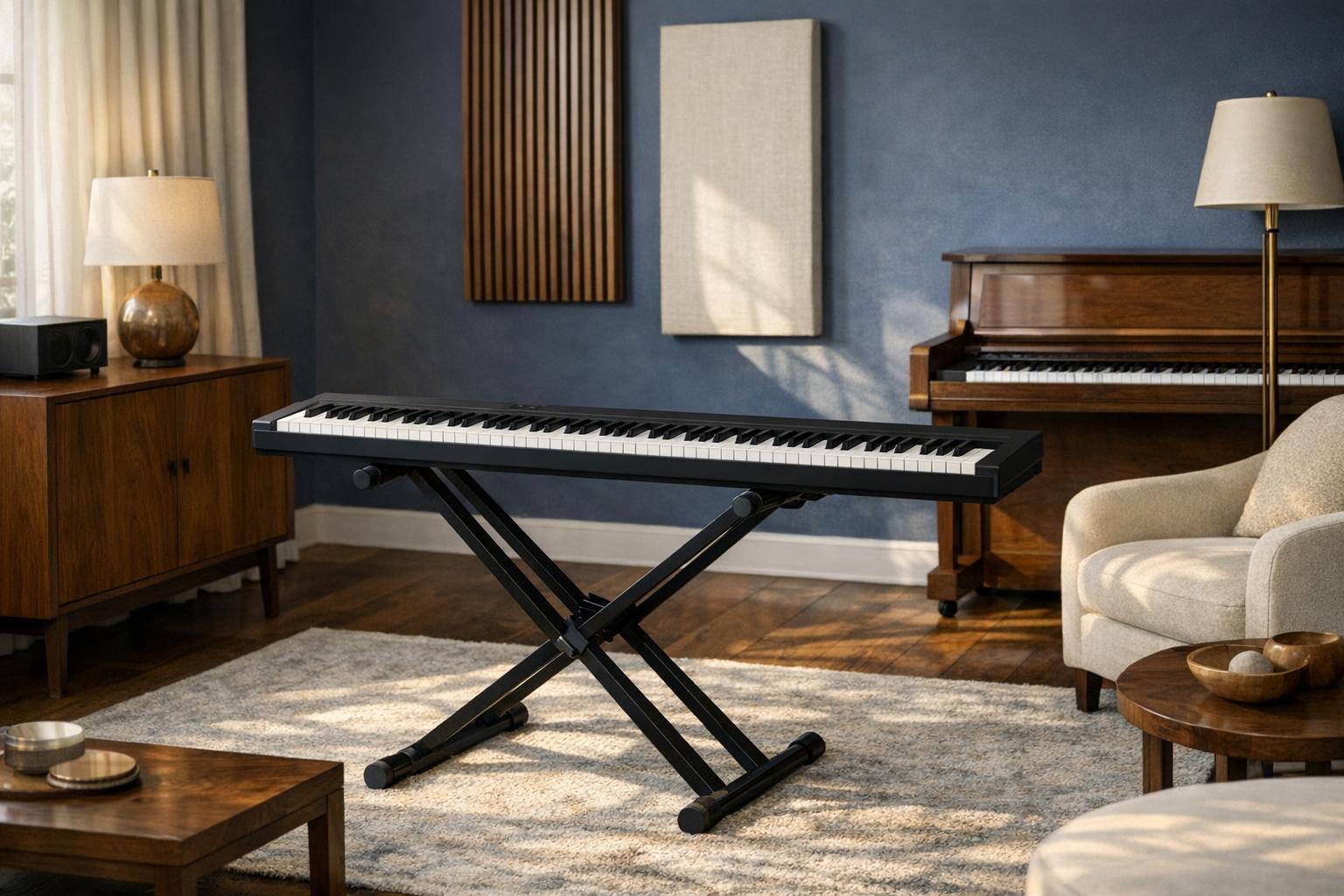
A portable on a wobbly X-stand with a footswitch is not the same instrument as a console. To close the gap you add:
- A stand at the right height. Roland makes the KSCFP10 for the FP-10; Yamaha sells dedicated stands for the P series. A furniture-style stand shakes less than an X-stand.
- A pedal: a piano-style sustain pedal at least, or a three-pedal unit where the piano accepts one (Yamaha LP-5A for the P-145BT).
- A bench at the right height. Yamaha advises setting it so your elbows are almost level with the keyboard.
Add those up and the price gap to an entry console often shrinks. Our guide to digital piano prices does the sums with dated prices.
Which one should you choose?
- A child starting lessons, piano in the living room: console, or a portable on a furniture stand with three pedals. The height and pedals stay put, and practice is one step away.
- Small flat, shared room, piano put away after use: portable. A 23 cm deep Casio or a 26 cm deep Roland fits on a desk.
- You move house often, or carry the piano to lessons and gigs: portable, plus a padded bag.
- Speakers matter more than headphones: console. The YDP-146 has 8 W x 2 amplifiers with 12 cm speakers and two headphone jacks per Yamaha, against 6 W x 2 and one jack on the P-45.
Measure the wall first. Our room and bench guide and the piano space planner help with the footprint.
Our rated consoles and portables
In our console digital pianos ranking, the Donner DEP-20 (9.4/10), Donner DDP-100, Black (8.6/10) and Donner DDP-80 (8.4/10) all list three pedals (the first two with a stand), and the Casio Privia PX-770, Black (8.1/10) is the classic cabinet option. In the portable ranking, the Yamaha P71 (9.2/10) and Yamaha P45 (8.8/10) lead, with the Roland FP-10 (7.9/10) for buyers who want Bluetooth MIDI.
Our rated picks
The three best-rated models of our best console digital pianos ranking, from buyer reviews and the listed specs.


Product images: Amazon listings
Frequently asked questions
Is a console digital piano better than a portable?
Not by default. A console adds a cabinet, three pedals and steadier speakers; a portable can have the same keyboard and is easier to move and store.
How heavy is a portable digital piano?
The common 88-key portables weigh about 11 to 13 kg: 11.5 kg for the Yamaha P-45, 12.6 kg for the Roland FP-10, about 11.2 kg for the Casio PX-S1100.
Can a portable digital piano have three pedals?
Some can, with an optional pedal unit, such as the Yamaha LP-5A for the P-145BT. Check that the piano has a pedal unit jack.
How much space does a console digital piano need?
About 1.36 m of wall and 42 cm of depth for a Yamaha YDP-146, plus room for the bench and your legs.
Sources
- Yamaha — ARIUS YDP-146 specifications (consulted Nov 2026)
- Yamaha — P-45 specifications (consulted Nov 2026)
- Casio — PX-870 / PX-770 user’s guide (PDF) (consulted Nov 2026)
- Roland — FP-10 digital piano (features and specifications) (consulted Nov 2026)
- Casio — PX-S1100 user’s guide (PDF) (consulted Nov 2026)
- Yamaha — P-145BT overview (consulted Nov 2026)
- Yamaha — Correct posture when playing the piano (consulted Nov 2026)
Products mentioned
- Casio Privia PX-770, Black (exact listing), read our review